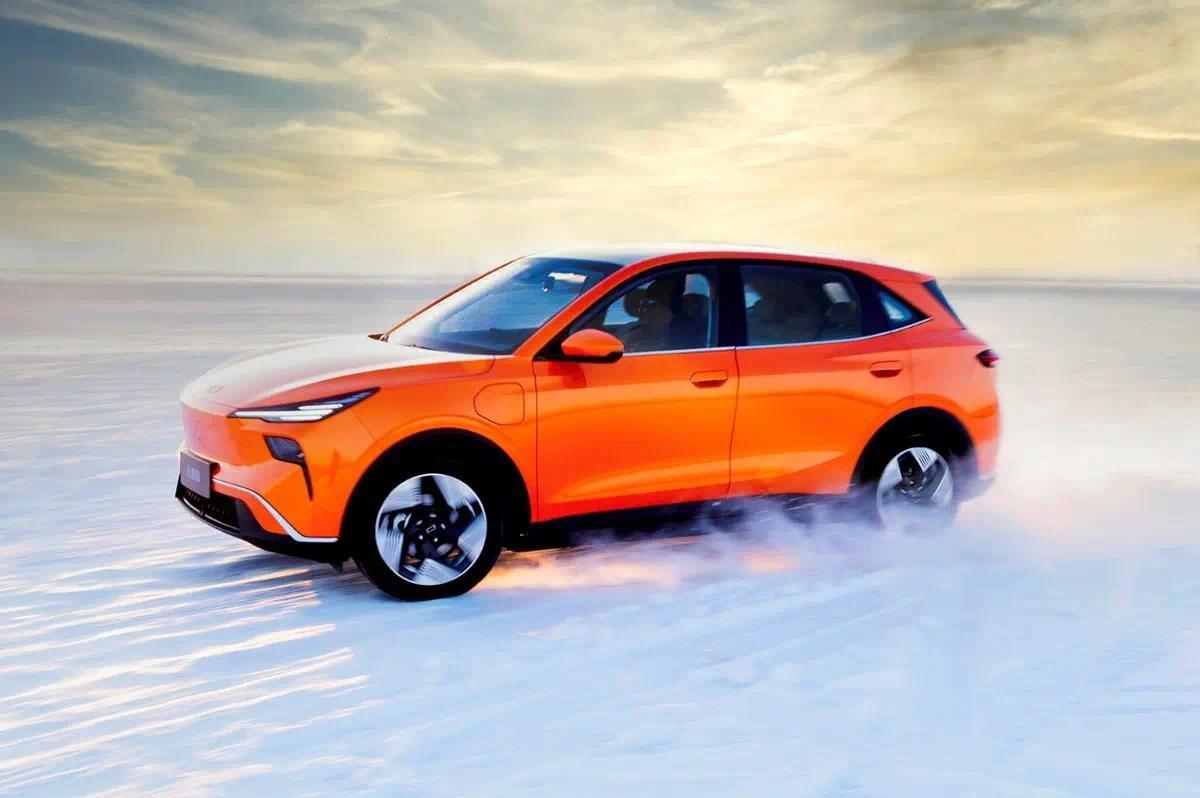
I recently followed a discussion comparing how EVs and ICE cars behave on snow. A lot of people still rely on “old-driver intuition”—pedal tricks and handling techniques. But that’s just misplaced confidence. On ice, physics beats skill every single time.
Working on the frontline of vehicle exports, I look only at data and outcomes.

1. Weight balance decides everything.
ICE vehicles pack most of their mass under the hood, making the nose heavy and the rear light. On a slippery surface, that imbalance is a built-in hazard: once the front loses grip, the rear swings out like a free-floating pendulum.
EVs spread their battery across the floorpan, creating a low and evenly distributed center of gravity. It’s the difference between pushing a stable four-wheel cart and balancing a top-heavy unicycle. In every physical test, keeping all four wheels planted is what truly matters. That’s structural physics at work.
2. Response time is the hidden divider.
When traction breaks, you need instant torque correction. ICE engines respond slowly—throttle delay, mechanical lag, gear engagement. Too many steps, too slow.
An EV can adjust power in tiny, precise increments within milliseconds. That level of fine control simply isn’t possible with mechanical drivetrains.
3. Humans are unreliable; software isn’t.
Tesla’s FSD performing better than humans in bad weather isn’t surprising. No human can modulate torque as cleanly or consistently. People panic, hesitate, or overreact. Software does none of that. Under extreme conditions, consistency and calm matter far more than experience.
If you or your customers live in high-latitude regions with long winters, stop fantasizing about big-engine AWD systems.
Business is about lowering risk. Choosing an EV isn’t just about being greener—it’s about gaining real, physics-based control. While some people keep practicing snow-driving techniques, the smarter ones have already picked the tool that makes those techniques unnecessary.